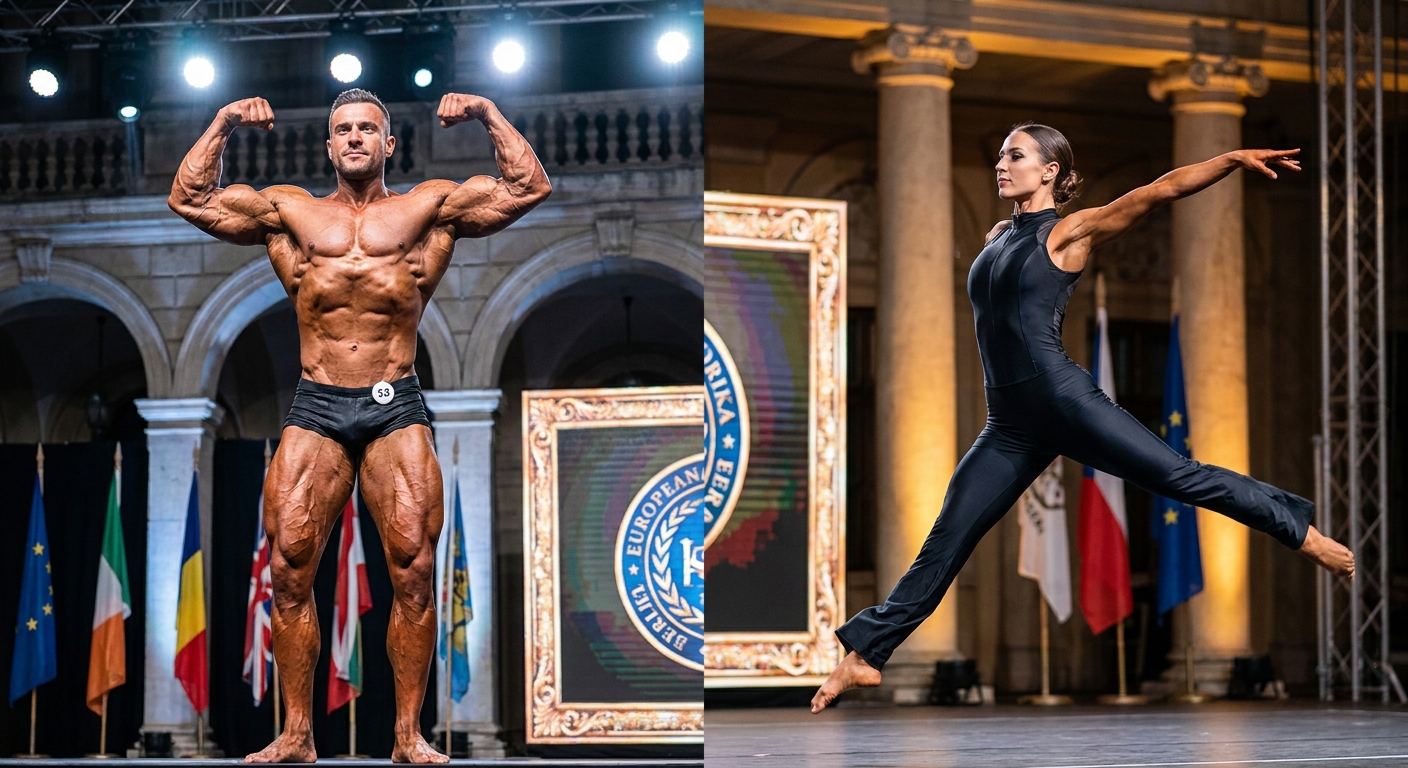
The competitive world of physique sports has captivated audiences and athletes across Europe for decades. While often grouped under the general umbrella of 'bodybuilding,' there are distinct categories and philosophies that differentiate true bodybuilding from competitive fitness. Understanding these nuances is crucial for both aspiring athletes and informed spectators. This article will delve into the classic differences and current trends shaping the European landscape.
CLASSIC DIFFERENCES: BODYBUILDING VS. FITNESS
Bodybuilding, at its core, is a discipline centered on achieving maximal muscle hypertrophy, symmetry, and extreme conditioning. Competitors meticulously sculpt their bodies to display dense, well-proportioned muscle mass with minimal body fat, revealing striations and deep separations.
Bodybuilding: The Pursuit of Maximal Mass and Definition
For decades, competitive bodybuilding has been synonymous with the pursuit of extreme muscularity. In categories like Men's Open Bodybuilding, the primary goal is to present the largest, most symmetrical, and most conditioned physique possible. Judges evaluate competitors on:
- Muscle Mass: Sheer size and density of muscle groups.
- Symmetry: Balance and proportion between different body parts.
- Definition & Conditioning: The degree of leanness, muscle separation, and vascularity.
- Posing: The ability to display the physique effectively through mandatory poses.
Categories like Classic Physique have emerged as a bridge, valuing aesthetic proportions and a more 'classic' look over sheer mass, often with weight and height limits. Yet, the underlying principle remains the showcasing of developed musculature.
Fitness: A Blend of Aesthetics, Conditioning, and Performance
In contrast, competitive fitness encompasses a broader spectrum of categories where overall aesthetics, balanced physique, and often athletic presentation take precedence over extreme muscle mass. The emphasis shifts towards a healthy, appealing, and well-conditioned body, sometimes combined with a performance element. Key fitness categories include:
- Bikini Fitness: Focuses on feminine curves, lean muscle, healthy glow, and overall stage presentation.
- Wellness Fitness: Highlights lower body development (glutes, thighs) while maintaining a balanced upper body.
- Figure: Requires more muscularity than Bikini, with broad shoulders and a narrow waist, but still less extreme than bodybuilding.
- Men's Physique: Emphasizes an aesthetic 'V-taper' physique, developed shoulders and back, with conditioned abs, judged in board shorts.
- Women's Fitness: Often includes a demanding choreographed routine showcasing strength, flexibility, and endurance, alongside a physique round.
Judging criteria vary significantly across these categories, reflecting the diverse ideals each represents. Generally, judges look for a balanced, aesthetically pleasing physique that aligns with the specific category's requirements, prioritizing shape, flow, and stage presence.
KEY DIFFERENTIATING FACTORS IN EUROPEAN COMPETITIONS
Muscle Mass and Development
The most obvious distinction lies in muscle mass. Bodybuilding demands maximum hypertrophy, dense muscle fibers, and a 'full' look. Fitness categories, while requiring muscle development, prioritize a lean, toned, and aesthetically pleasing physique without the extreme mass of bodybuilding. The ideal physique in Bikini, for instance, would be penalized for excessive muscularity.
Conditioning and Definition
Bodybuilding often pushes conditioning to extreme levels, aiming for paper-thin skin, deep striations, and a 'dry' look to maximize muscle visibility. Fitness categories also require excellent conditioning but typically avoid the extreme leanness, favoring a healthier, more 'glamorous' look with muscle separation that is defined but not overly harsh or vascular.
posing and Presentation
Bodybuilding posing routines are structured around mandatory poses designed to highlight individual muscle groups (e.g., most muscular, lat spread). While presentation is important, the focus is on showcasing raw muscle. Fitness categories, especially Bikini and Men's Physique, feature more dynamic T-walks or quarter turns, emphasizing fluidity, confidence, and overall stage presence. In Women's Fitness, the athletic routine is a major component of the score.
JUDGING CRITERIA EVOLUTION AND EUROPEAN TRENDS
The European competitive landscape often mirrors global trends but also retains unique preferences. The rise of categories like Classic Physique and Wellness in Europe demonstrates an increasing appreciation for balanced, aesthetic physiques. While extreme mass still holds its place in Open Bodybuilding, there's a growing demographic gravitating towards the more achievable and aesthetically pleasing standards of fitness categories. European judges often place a strong emphasis on natural proportionality, presentation, and a 'healthy' look, particularly in the bikini and wellness divisions. The professionalism and marketability of athletes on stage also play an increasingly significant role.
PRACTICAL ADVICE FOR ASPIRING COMPETITORS
- Choose Your Category Wisely: Honestly assess your physique, genetic potential, and personal preferences. Do you aim for maximal muscle, or a more aesthetic, balanced look? Research the specific requirements and judging criteria for each category within your federation (e.g., EBBF).
- Seek Expert Coaching: A qualified coach specializing in your chosen category can provide invaluable guidance on training, nutrition, posing, and peak week strategies.
- Prioritize Consistency: Regardless of the category, success in physique sports demands unwavering dedication to your training and diet plan over an extended period.
- Master Presentation: Posing, stage walk, tanning, hair, and makeup are critical, especially in fitness categories. Practice tirelessly to exude confidence and professionalism.
CONCLUSION
While both bodybuilding and fitness competitions celebrate the dedication to sculpting the human body, they operate under distinct ideals and judging criteria. Understanding these differences is paramount for anyone entering the European competitive scene. Whether you aspire to the colossal stage of Open Bodybuilding or the refined aesthetics of Bikini Fitness, an informed approach ensures that your hard work is channeled towards the right goals, maximizing your potential for success.